Portugal Untold

0940.21° N · 8.43° WHistory & Heritage

Coimbra & Royal PortugalSeven centuries of learning, on a hill above the Mondego.

The University of Coimbra, its baroque library and the old royal city below it, with the Roman ruins of Conímbriga if you wish.

Format
Private experience
Duration
About 8–9 hours · Full day
Group
Your group only, up to 6 guests
Destinations
Coimbra — Conímbriga

The story

Learning, history, architecture and academic traditions

Before Lisbon, there was Coimbra. Portugal’s first king made this hilltop city on the Mondego his seat, and here he and his son are buried. In 1537 the kingdom’s university, founded in 1290, settled for good in the royal palace at the top of the hill, and it has never left.

Coimbra is still a university town in the fullest sense. Students in black capes cross the courtyard of the Paço das Escolas, the tower bell they nicknamed “the Goat” still marks the hours, and on spring nights a serenade of Coimbra fado can stop a whole street. The upper town, the Alta, and the long street of the Sofia below, are a UNESCO World Heritage Site.

The day begins at the top, with the palace, the chapel and the gilded Joanina Library, then descends through the medieval lanes to the Old Cathedral and the monastery where the first kings lie. After a long lunch, you can add Conímbriga, among the largest Roman settlements excavated in Portugal. Your driver shares the history along the way; inside the monuments, you explore at your own pace.
Highlights

Moments to look forward to

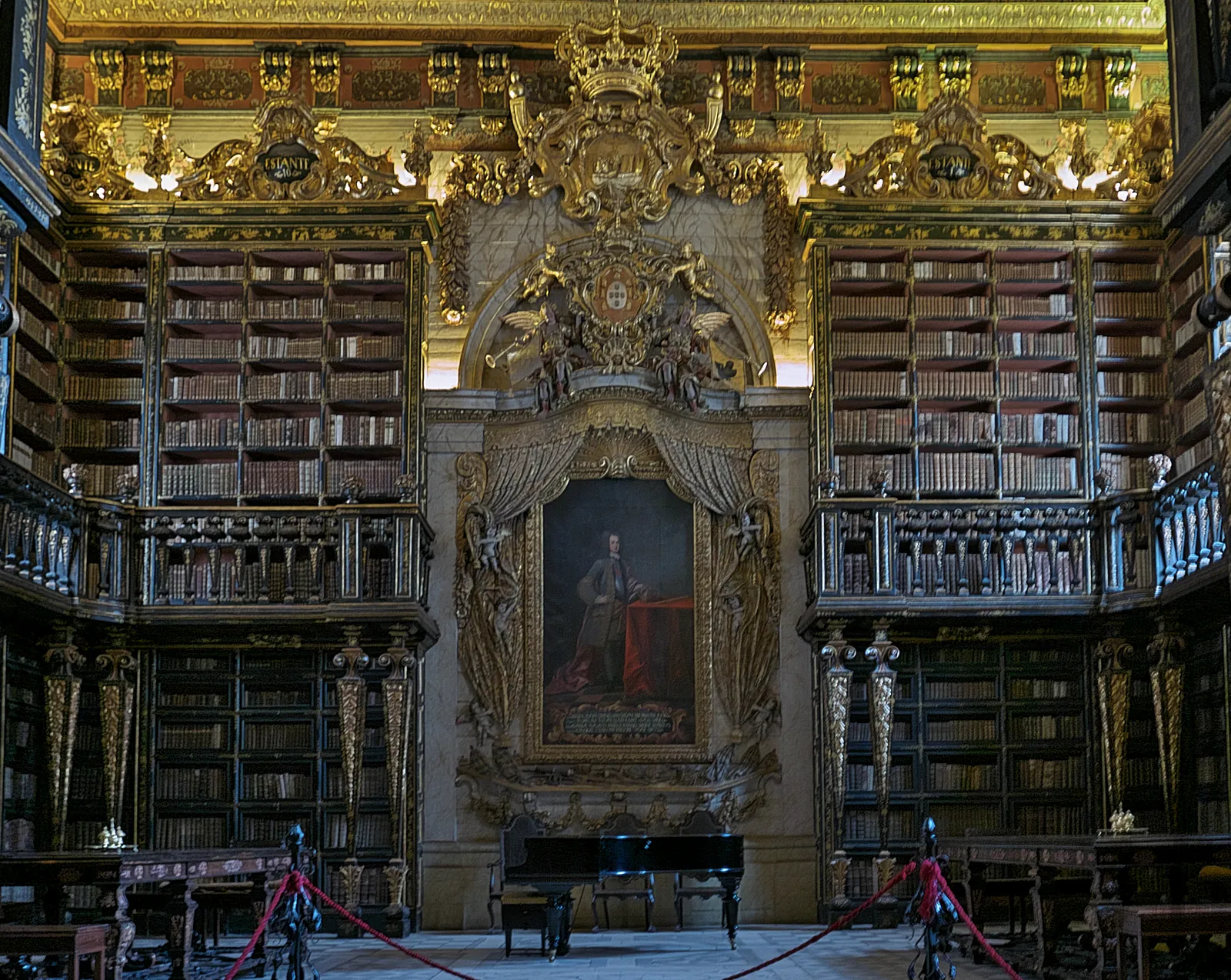
  1. Gilded baroque interior of the Biblioteca Joanina, with carved wooden bookcases and the portrait of King João V

    The Joanina Library

    Gilded wood, lacquered chinoiserie and tens of thousands of old books, in one of the most beautiful baroque libraries in Europe, entered through the old academic prison below.

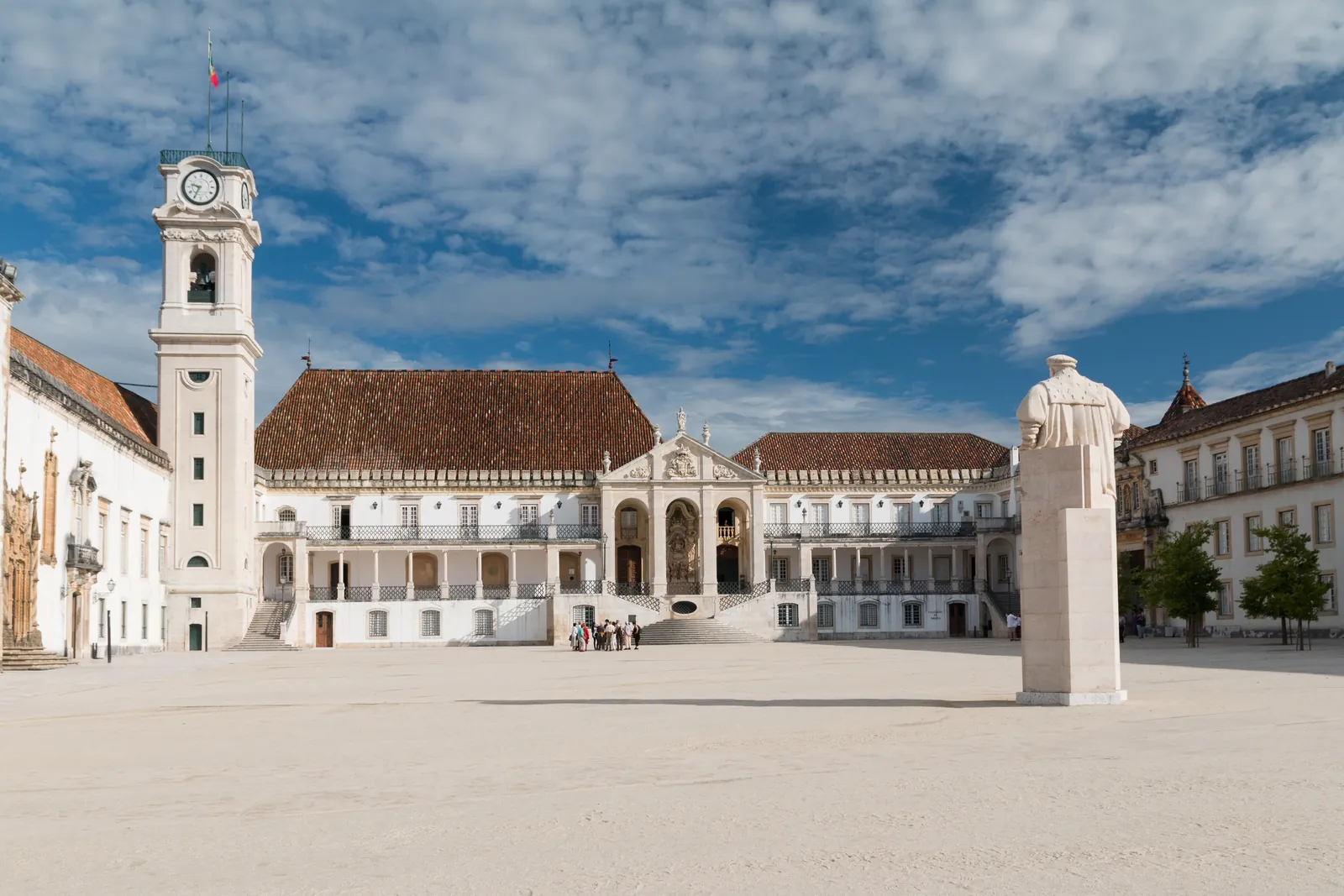
  2. The Paço das Escolas courtyard of the University of Coimbra, with its baroque clock tower and the Via Latina

    A palace for a university

    The Paço das Escolas, the medieval royal palace given over to the university in 1537, with its Great Hall, its chapel and its terrace above the river.

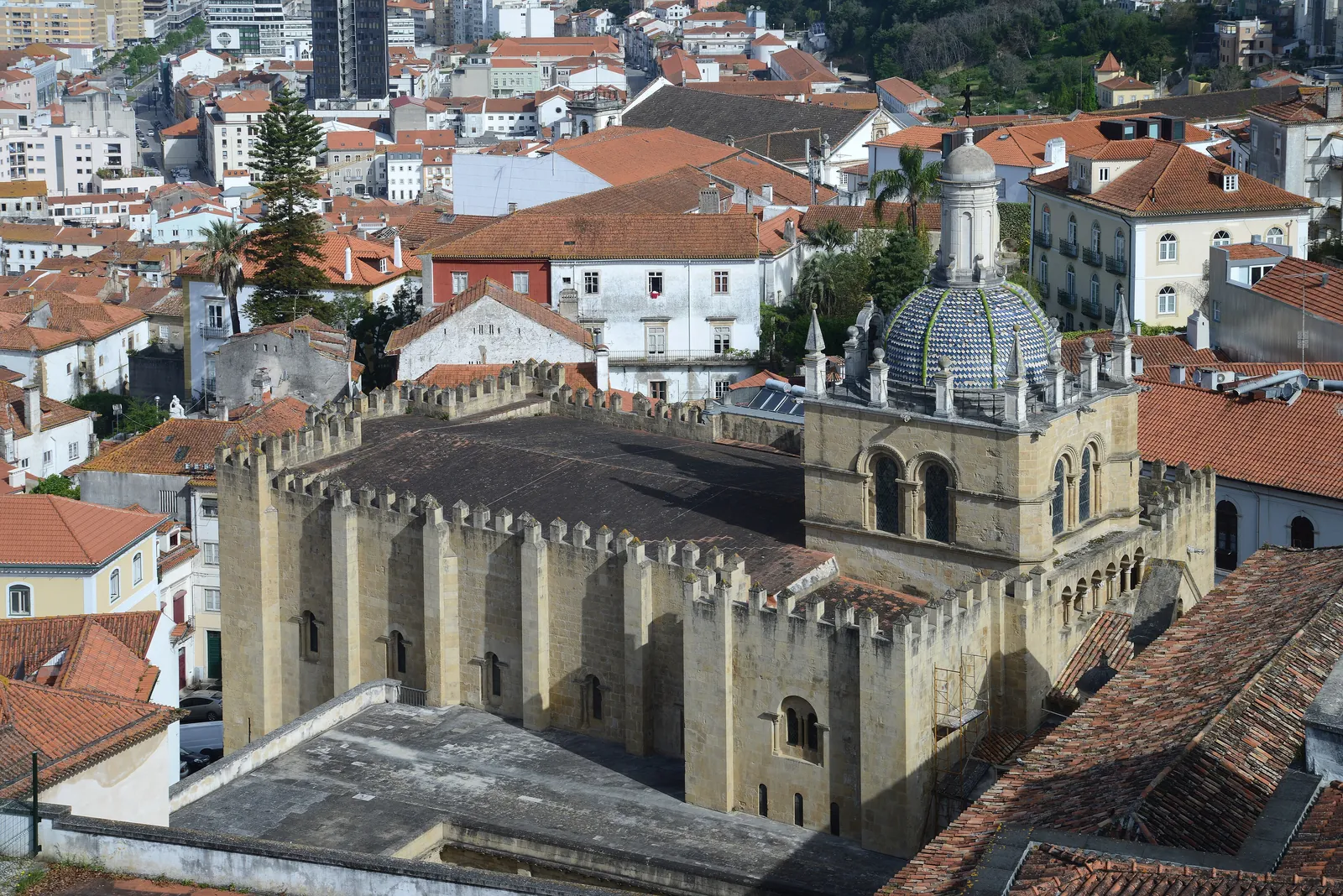
  3. The fortress-like Romanesque Sé Velha of Coimbra seen from above, surrounded by the terracotta roofs of the old town

    The Old Cathedral

    A fortress-like Romanesque cathedral from the 12th century, rising from the steep streets of the upper town.

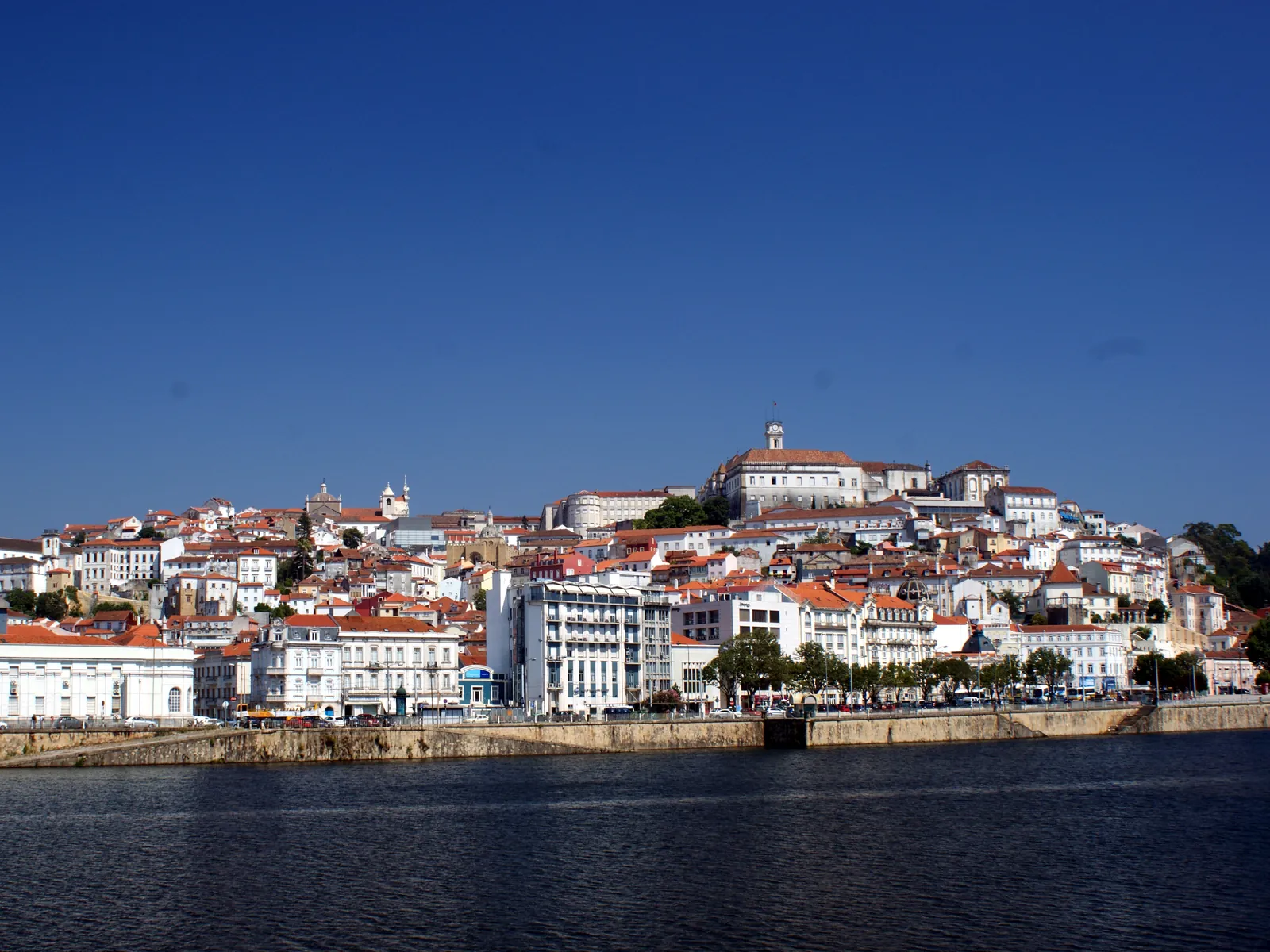
  4. Coimbra's old town rising on its hill above the Mondego river, crowned by the university tower

    The first kings

    In the Monastery of Santa Cruz, the tombs of Afonso Henriques, first king of Portugal, and his son Sancho I.

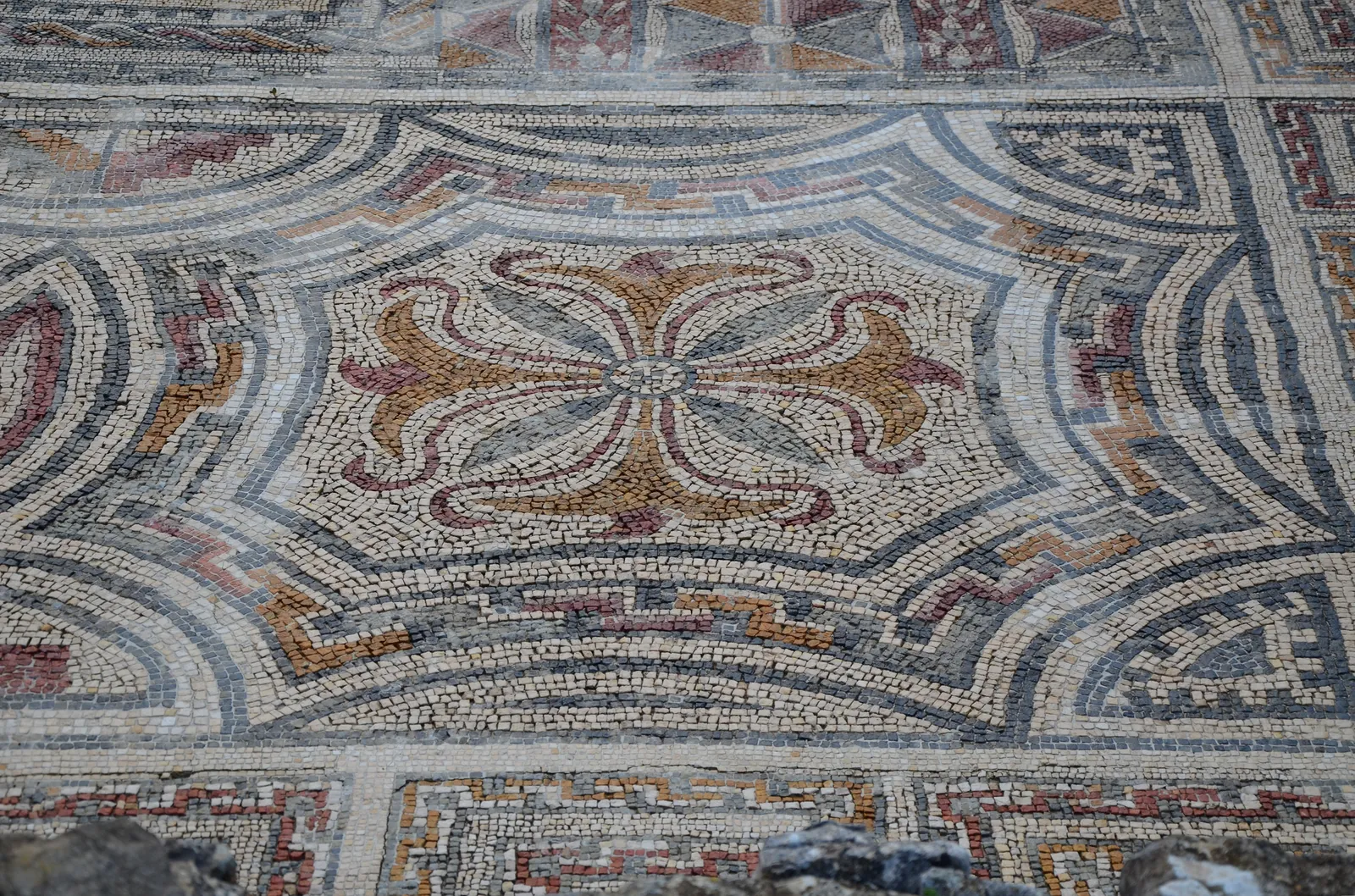
  5. Colourful geometric Roman mosaic floor with a central floral motif in the House of the Swastika at Conímbriga

    Roman Conímbriga

    Optional: mosaics, fountains and town walls in one of the largest Roman sites excavated in Portugal.

Itinerary

The journey, stop by stop

A suggested plan. Order and timing are adapted to your group, the day and opening hours.

  1. Pick-up

    Pick-up

    We collect your group at your accommodation or an agreed meeting point in the morning, timed around your entry slot for the Joanina Library.

    Why it matters

    On the way north, your driver sketches the story you are about to walk through: the founding of Portugal, the first kings in Coimbra, and a university that moved back and forth between two cities for more than two centuries.

  2. VisitTime here: 90–120 min

    Universidade de Coimbra · 40.21° N · 8.43° W

    The Paço das Escolas courtyard of the University of Coimbra, with its baroque clock tower and the Via Latina

    Explore the Paço das Escolas at your own pace: the courtyard and its views over the Mondego, the rooms of the Royal Palace, St Michael’s Chapel, and, at your ticket time, the Joanina Library. Official guided visits can be booked with the university where available.

    Why it matters

    Founded by King Dinis in Lisbon in 1290, the university alternated between Lisbon and Coimbra until King João III installed it permanently in Coimbra’s royal palace in 1537. It is one of the oldest universities in continuous operation in Europe, and the heart of the UNESCO World Heritage Site “University of Coimbra – Alta and Sofia”.

    Good to know: Tickets are required. Entry to the Joanina Library is timed and limited, so we recommend booking ahead. Photography and filming are not allowed on the library’s main floor, and flash is not allowed inside. The Royal Palace has stairs and is not accessible to wheelchairs.

  3. WalkTime here: 60–90 min

    Coimbra · 40.21° N · 8.43° W

    The fortress-like Romanesque Sé Velha of Coimbra seen from above, surrounded by the terracotta roofs of the old town

    Walk down from the university through the lanes of the Alta to the Old Cathedral, then by the steep street of Quebra-Costas to the Baixa, the lower town, and the Monastery of Santa Cruz.

    Why it matters

    The Sé Velha is one of the finest Romanesque buildings in Portugal, raised in the 12th century, when Coimbra was the seat of the young kingdom. The Monastery of Santa Cruz, founded in 1131, holds the tombs of Afonso Henriques and Sancho I, the first two kings, and is a National Pantheon.

    Optional: Visit the cloister of Santa Cruz, or stop for coffee and a pastry in the Baixa.

    Good to know: Steep, cobbled streets and steps. The route is downhill where possible; the car can meet you at the bottom.

  4. MealTime here: 60–75 min

    Lunch in Coimbra

    A relaxed lunch in a traditional restaurant, suggested to suit your tastes. Try chanfana, goat slow-cooked in red wine, or the suckling pig of nearby Bairrada, and finish with pastéis de Santa Clara, a convent sweet of the city.

    Why it matters

    Coimbra’s table mixes mountain and plain: the hearty dishes of the inland hills, the roasts of the Bairrada wine country, and the egg-and-almond sweets of its convents.

    Good to know: Meals and drinks are paid directly at the restaurant. Tell us about dietary needs in your request.

  5. VisitOptionalTime here: 60–90 min

    Conímbriga · 40.10° N · 8.49° W

    Colourful geometric Roman mosaic floor with a central floral motif in the House of the Swastika at Conímbriga

    South of the city, walk among the streets, baths and houses of a Roman town, with mosaic floors still in place, and visit the site museum.

    Why it matters

    Conímbriga is one of the largest Roman settlements excavated in Portugal and a National Monument. The House of the Fountains keeps vast mosaic floors and a garden of water jets; the monographic museum shows objects found on site, from daily life to the forum.

    Optional: Adds around one to one and a half hours to the day.

    Good to know: Ticketed. Open-air, uneven ground and little shade; bring a hat in summer.

  6. Return

    Return

    An unhurried drive back to your accommodation or another agreed point.

    Why it matters

    Time to look through the photos you were allowed to take, and to remember the one room where you were not.

Route map of Coimbra & Royal Portugal1University of Coimbra2Coimbra3Conímbriga (optional)

The route

  1. 1 University of Coimbra
  2. 2 Coimbra
  3. 3 Conímbriga (optional)

Road routes calculated from OpenStreetMap data. Your driver may choose a different road on the day.

Places to be confirmed with your booking are listed in the itinerary but not drawn.

Architectural notes

A walk through the upper town

Six buildings that tell the story of Coimbra, from the cathedral of the first kings to the library of an absolute monarch.

The Paço das Escolas courtyard of the University of Coimbra, with its baroque clock tower and the Via Latina

Royal Palace, University

Paço das Escolas

40.21° N · 8.43° W

The old royal palace of the Alcáçova, where the first kings lived, became the home of the university in 1537. Its Great Hall still hosts the most solemn academic ceremonies.

University here since
1537
Look for
The Great Hall and the terrace over the Mondego
Gilded baroque interior of the Biblioteca Joanina, with carved wooden bookcases and the portrait of King João V

Baroque library

Biblioteca Joanina

40.21° N · 8.43° W

Built under King João V in the early 18th century, its three halls glow with gilded woodwork and painted chinoiserie. Beneath the noble floor lies the old academic prison, through which visitors now enter.

Built
Early 18th century
Entry
Timed tickets
Photography
Not allowed on the main floor
The Paço das Escolas courtyard of the University of Coimbra, with its baroque clock tower and the Via Latina

University chapel

Capela de São Miguel

40.21° N · 8.43° W

Behind a Manueline doorway, walls lined with azulejos and a gilded baroque organ: the chapel of the palace, still used for Mass.

Style
Manueline to baroque
Note
Closed to visits during Sunday Mass
Coimbra's old town rising on its hill above the Mondego river, crowned by the university tower

“A Cabra”

Torre da Universidade

40.21° N · 8.43° W

The baroque tower over the courtyard, finished in 1733. Its bell, nicknamed “the Goat” by students, once called them to classes and marked the hours of university life.

Built
1728–1733
Steps
184, when open to visits
The fortress-like Romanesque Sé Velha of Coimbra seen from above, surrounded by the terracotta roofs of the old town

Romanesque cathedral

Sé Velha

40.21° N · 8.43° W

Crenellated like a castle, the Old Cathedral was built in the 12th century, in the years when Coimbra was the seat of Portugal’s first kings.

Built
12th century
Style
Romanesque
Coimbra's old town rising on its hill above the Mondego river, crowned by the university tower

National Pantheon

Mosteiro de Santa Cruz

40.21° N · 8.43° W

Founded in 1131 with the support of Afonso Henriques, and later rebuilt in Manueline style. The first two kings of Portugal lie in carved 16th-century tombs on either side of the main chapel.

Founded
1131
Tombs
Afonso Henriques and Sancho I

Chronology

Kings, scholars and students

How a royal city became a university city, and how its students made traditions of their own.

  • History
  • Tradition

Dates are documented history; the student customs are living traditions and are marked as such.

  1. 1131

    History

    The first king’s city

    Afonso Henriques makes Coimbra his base and supports the founding of the Monastery of Santa Cruz. The city remains the seat of the kings until the mid-13th century.

    Coimbra's old town rising on its hill above the Mondego river, crowned by the university tower
  2. 1290

    History

    A university in Lisbon

    King Dinis founds a general study in Lisbon, confirmed by the Pope the same year: the origin of the University of Coimbra.

  3. 1308

    History

    Between two cities

    The university moves to Coimbra for the first time, and for more than two centuries it travels back and forth between Coimbra and Lisbon.

  4. 1537

    History

    Coimbra for good

    King João III installs the university permanently in Coimbra, in the royal palace at the top of the hill.

    The Paço das Escolas courtyard of the University of Coimbra, with its baroque clock tower and the Via Latina
  5. Early 18th century

    History

    Library and tower

    Under King João V, the Joanina Library is built, and the university tower is completed in 1733.

    Gilded baroque interior of the Biblioteca Joanina, with carved wooden bookcases and the portrait of King João V
  6. Late 19th century

    Tradition

    Coimbra fado

    Students develop their own fado: sung by men in academic dress, with the Coimbra guitar, often as a night-time serenade. At a serenade, listeners traditionally show their appreciation without applause.

  7. Every May

    Tradition

    Queima das Fitas

    Graduating students celebrate the end of their studies by burning the coloured ribbons of their faculties, in a week that opens with a midnight serenade on the steps of the Old Cathedral. Many students wear the black capa e batina throughout the academic year.

  8. 2013

    History

    World Heritage

    UNESCO inscribes the “University of Coimbra – Alta and Sofia” on the World Heritage List.

The Paço das Escolas courtyard of the University of Coimbra, with its baroque clock tower and the Via Latina
The fortress-like Romanesque Sé Velha of Coimbra seen from above, surrounded by the terracotta roofs of the old town
Colourful geometric Roman mosaic floor with a central floral motif in the House of the Swastika at Conímbriga

Practical information

Before you go

Duration
Typically about 8 to 9 hours including pick-up and return, depending on where you start and whether you add Conímbriga. Confirmed when you book.
Pick-up
At your accommodation or an agreed meeting point within the area we cover, on the Silver Coast, around Leiria and Fátima, or in Coimbra. Confirmed when you book.
Drop-off
At your accommodation or another agreed point.
Group size
Private: your group only, up to 6 guests (luggage permitting).
Walking
Moderate to demanding. Coimbra’s old town is built on a steep hill, with cobbles and steps. We plan the walk downhill where we can.
What to wear
Shoes with good grip for steep cobbles and stone steps; respectful clothing for churches.
Accessibility
The Royal Palace and the university tower are not accessible to wheelchairs; access to the Joanina Library is limited to the main floor. The streets of the Alta are steep. Tell us in your request and we will adapt the day.
Season
All year. The university is busiest in summer; in May, the Queima das Fitas fills the city with students and celebrations.

Included

  • Private vehicle and local driver for the agreed itinerary
  • Pick-up and drop-off within the agreed area
  • Local knowledge and context along the way
  • Planning the day around your Joanina Library time slot

Not included

  • Entrance tickets (University of Coimbra, Santa Cruz cloister, Conímbriga)
  • Meals and drinks
  • Guided visits inside the university or monuments

Arranged for each booking

  • Entrance tickets are bought on the day or in advance where needed; we tell you which stops have paid entry.

Price

One price for your whole group

The price covers the whole tour — a private vehicle and driver for your group alone, never seats on a shared excursion. It depends only on how many of you travel.

Your private experience

Guests
2 guests:

€350 total

€175 per person

Private tour · Just your group

Request your private tour Customize this journey

Open this route in the journey builder and make it yours.

Entrance tickets, meals and drinks are paid separately unless your proposal says otherwise.

Sending a request is free and is not a booking.

Questions

About this journey

Do we need to book the Joanina Library in advance?

We recommend it. Entry is by timed ticket and the number of visitors per slot is limited, so slots can fill up, especially in summer. We plan the rest of the day around your time.

Can we take photos in the library?

Not on the main floor of the Joanina Library, where photography and filming are prohibited. Elsewhere in the university, photos without flash are generally fine.

Will the driver guide us inside the university?

Your driver shares the history and context along the way but is not a certified tourist guide. The university offers its own guided visits, which you can book where available.

Is Coimbra difficult to walk?

It is steep. The upper town sits on a hill, with cobbles and steps. We plan the walk downhill where we can and the car can meet you at the bottom. Tell us about mobility needs in your request.

Can we hear Coimbra fado?

Coimbra fado is often performed in the evening in the city. Late events are outside the usual day, but if you would like to stay, tell us in your request and we will see what can be arranged.

Is Conímbriga worth adding?

For anyone interested in the Romans, yes: the mosaics are remarkable and the site is close to the city. It makes for a long day, so we decide together when you book.

Pair it with

  • Private8–9 hFull day

    Royal Love & Tragedy

    Romance, royal history and legend

    The great love story of medieval Portugal, from the tombs of Alcobaça to the Quinta das Lágrimas in Coimbra.

    1. Coimbra
    2. Alcobaça

    From €350 / private group Up to 6 guests.

  • Private7–8 hFull day

    UNESCO Heritage Trail

    Architecture, World Heritage and the making of Portugal

    Three more World Heritage monasteries: Alcobaça, Batalha and the Convent of Christ in Tomar.

    1. Alcobaça
    2. Batalha
    3. Tomar

    From €320 / private group Up to 6 guests.

  • Private7–8 hFull day

    Medieval Portugal

    Castles, queens and the legends of the Reconquest

    The castles and walled towns of the kingdom the first kings built from Coimbra.

    1. Óbidos
    2. Alcobaça
    3. Leiria
    4. Porto de Mós

    From €310 / private group Up to 6 guests.

Seven centuries of learning, on a hill above the Mondego.

Plan this journey Customize this journey

Priced per vehicle, not per person — only your group travels.