Portugal Untold

1140.21° N · 8.43° WHistory & Heritage · Romantic Experiences

Royal Love & TragedyLove, murder and two tombs that face each other.

Follow Pedro and Inês from Coimbra, where she lived and died, to Alcobaça, where they lie: Portugal’s most famous love story, with history and legend told apart.

Format
Private experience
Duration
About 8–9 hours · Full day
Group
Your group only, up to 6 guests
Destinations
Coimbra — Alcobaça

The story

Romance, royal history and legend

In 1340 a young Galician noblewoman arrived in Portugal in the household of a Castilian bride who had come to marry the heir to the throne. The heir, Pedro, fell in love with the lady-in-waiting. Her name was Inês de Castro.

What followed has been told for almost seven centuries: a forbidden love, four children, a king who feared Castile, a murder in Coimbra on a January day in 1355 and a son’s revenge once he was crowned. Poets, from Camões onwards, made it Portugal’s great tragedy; legend added a dead queen crowned on a throne.

This day follows the story in the order it happened: the city where they lived, the gardens where tradition places their love and her death, and finally Alcobaça, where Pedro had them laid to rest. Your driver tells the tale between stops, and we keep history and legend clearly apart.
Highlights

Moments to look forward to

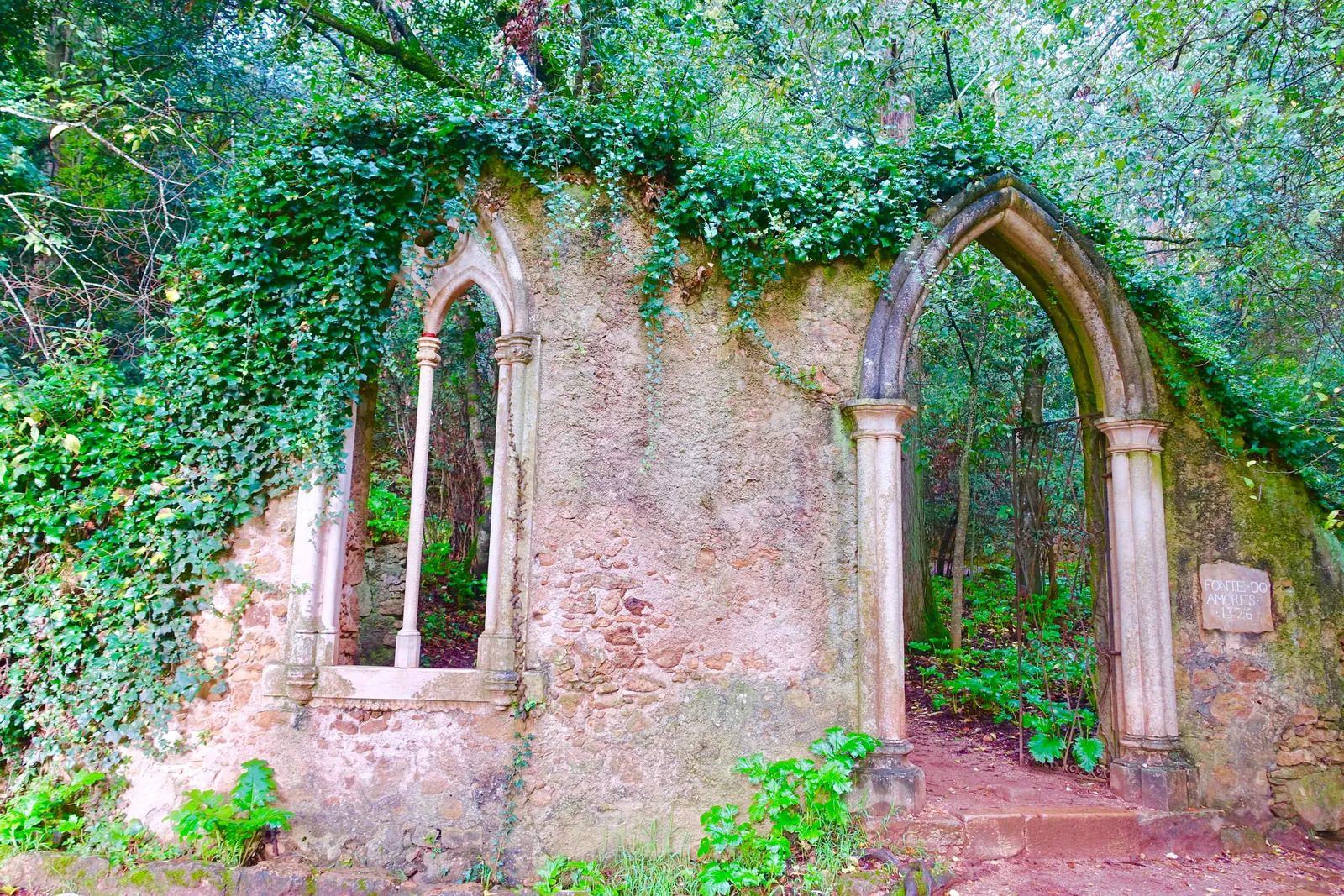
  1. Ivy-covered neo-Gothic arches at the Fonte dos Amores in the wooded gardens of Quinta das Lágrimas, Coimbra

    The Fountain of Tears

    In the gardens of Quinta das Lágrimas, water rising from the rock over stones tinged red: the spring Camões said was made of tears.

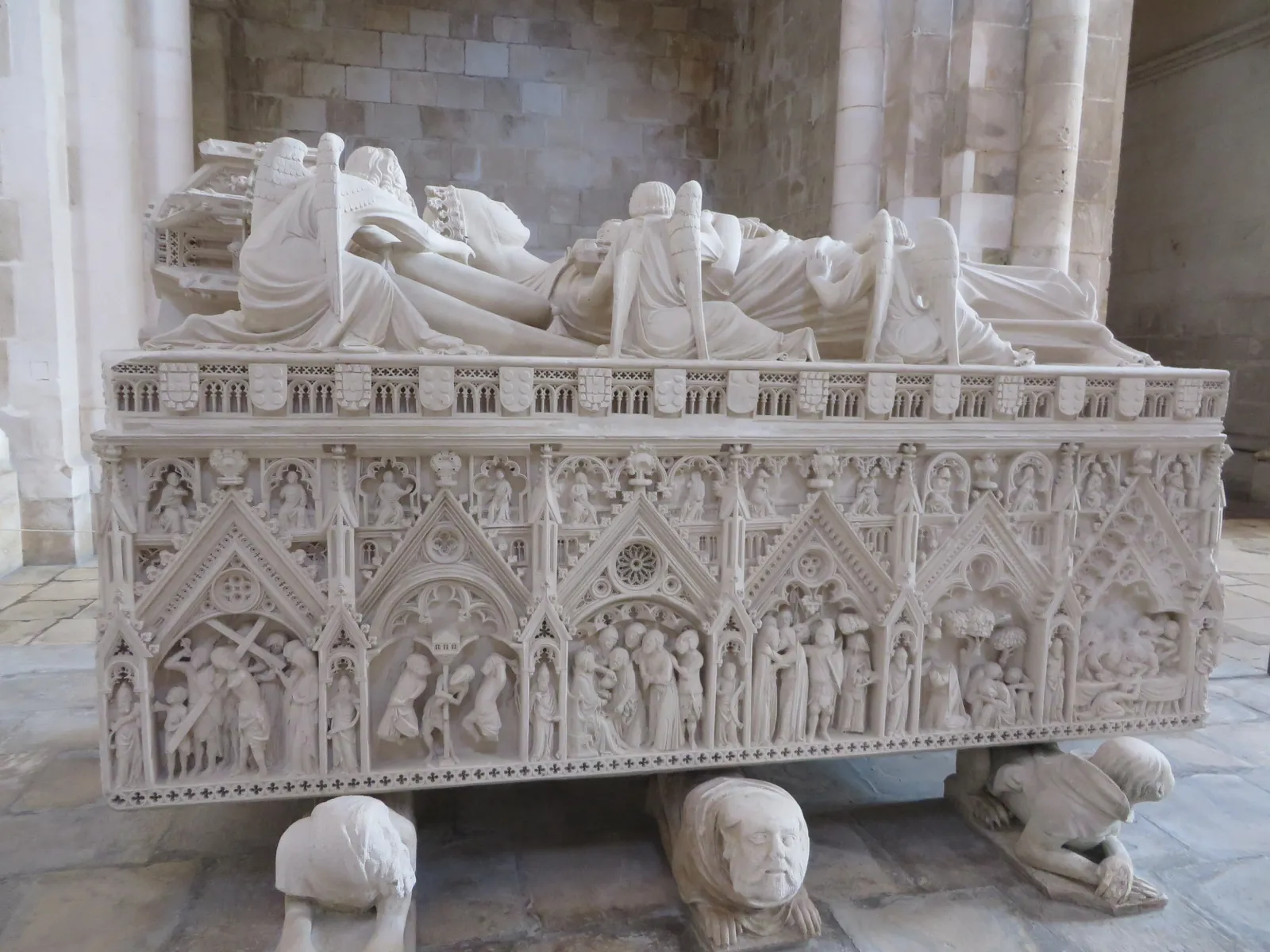
  2. The carved Gothic limestone tomb of Inês de Castro in Alcobaça Monastery, her effigy attended by angels

    Two tombs, face to face

    Pedro and Inês carved in stone in the transept of Alcobaça, among the finest Gothic sculpture in Portugal.

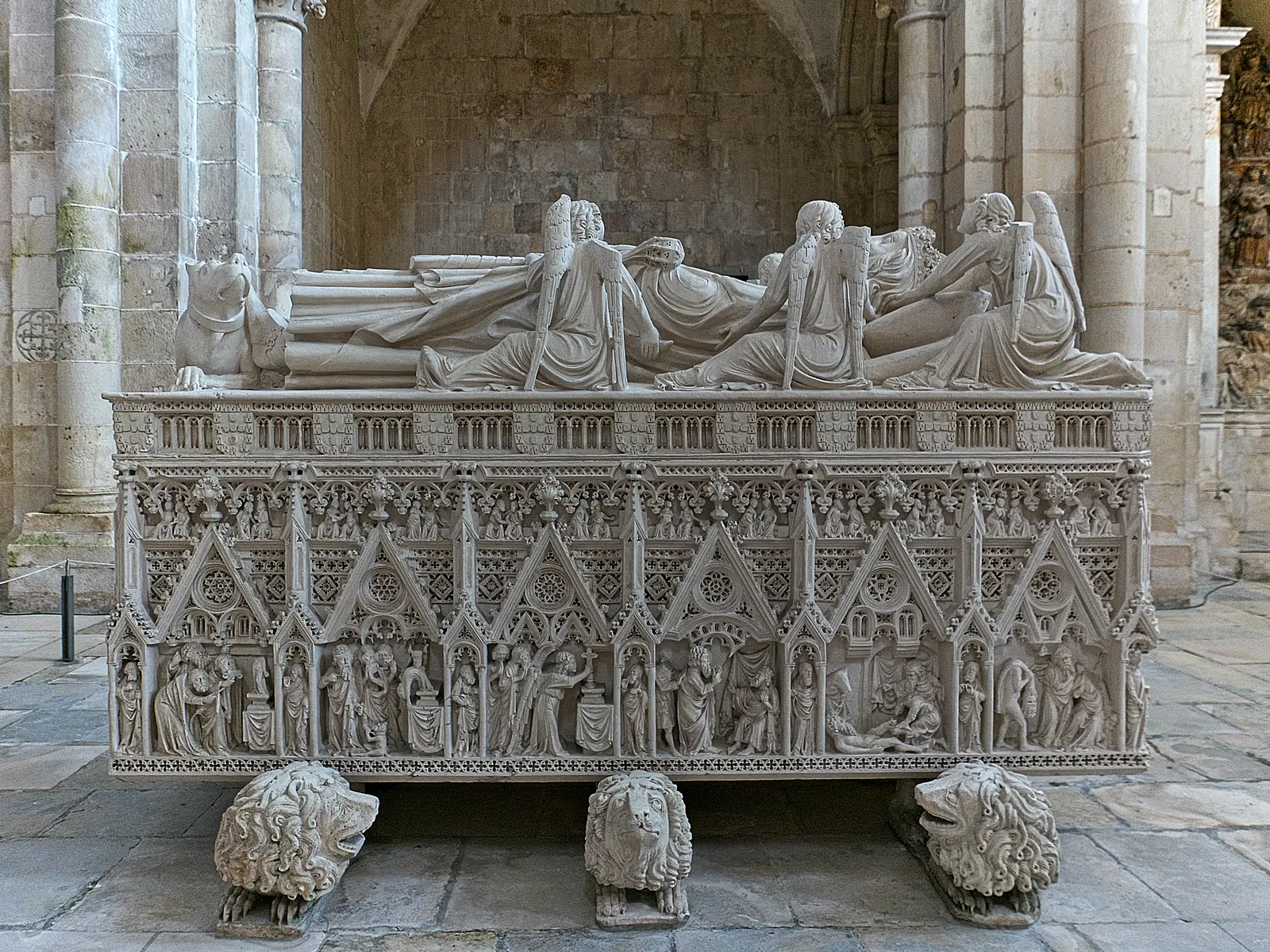
  3. The Gothic tomb of King Pedro I in Alcobaça Monastery, richly carved and resting on sculpted lions

    Pedro’s rose

    A great carved rose on the king’s tomb, often read as a Wheel of Fortune, and a tiny inscription that scholars still argue about.

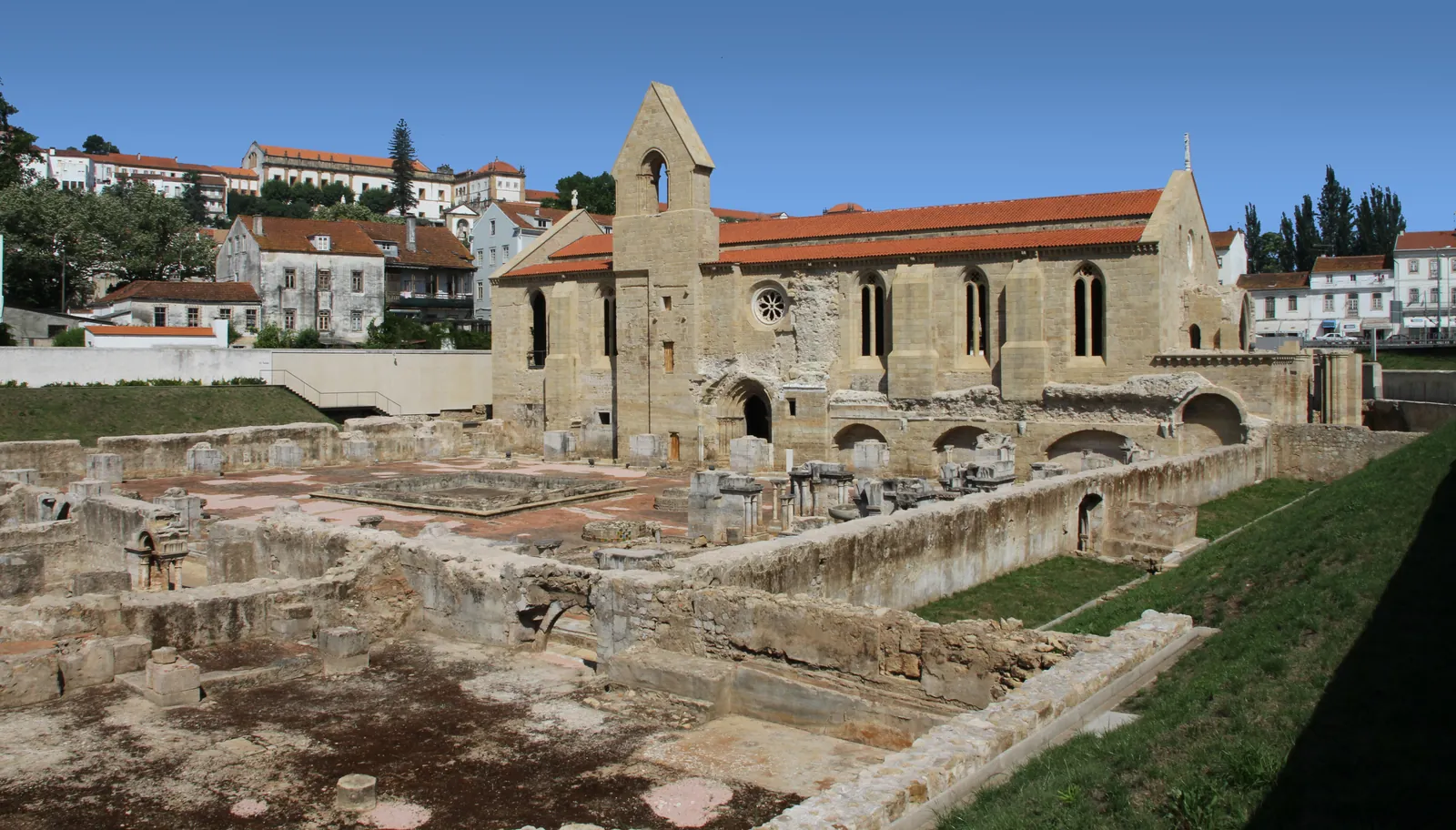
  4. The Gothic church and excavated cloister ruins of the Monastery of Santa Clara-a-Velha on the Mondego bank

    Santa Clara-a-Velha

    The Gothic monastery where Inês was first buried, reclaimed from the river centuries after the nuns left.

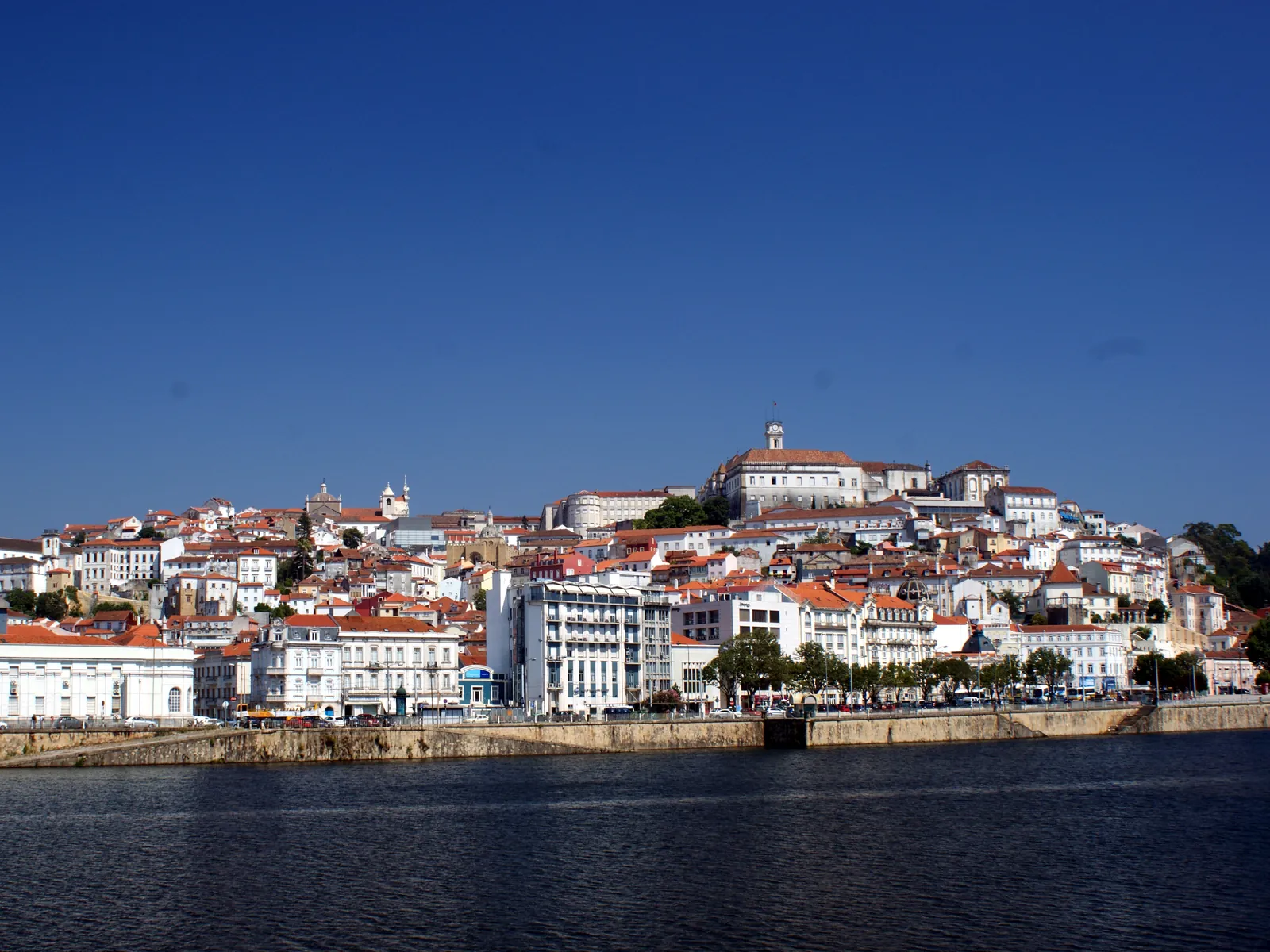
  5. Coimbra's old town rising on its hill above the Mondego river, crowned by the university tower

    Old Coimbra

    The steep lanes of Portugal’s first capital, climbing from the Mondego to the Old Cathedral and the University.

Itinerary

The journey, stop by stop

A suggested plan. Order and timing are adapted to your group, the day and opening hours.

  1. Pick-up

    Pick-up

    We collect you at your accommodation or an agreed meeting point and drive north to Coimbra. On the way, the story begins.

    Why it matters

    Pedro was the heir of King Afonso IV. His bride, Constança Manuel, reached Portugal in 1340, and Inês de Castro came with her as one of her ladies.

    Good to know: Pick-up time is agreed when you book. This is a longer day, so an early start helps.

  2. WalkTime here: 60–90 min

    Coimbra · 40.21° N · 8.43° W

    Coimbra's old town rising on its hill above the Mondego river, crowned by the university tower

    From the riverside, walk up through the Arco de Almedina into the old town: the Romanesque Old Cathedral, the steep lanes and, if you wish, the University at the top of the hill. In the lower town, the Monastery of Santa Cruz holds the tombs of Portugal’s first two kings.

    Why it matters

    Coimbra was the heart of the young kingdom, and it was in Coimbra that Inês was living when she was killed. The University of Coimbra – Alta and Sofia was inscribed by UNESCO in 2013.

    Good to know: The old town is steep, with cobbles and stairs. The University needs a separate ticket; tell us in advance if you would like to include it.

  3. MealTime here: 45–60 min

    Lunch in Coimbra

    An unhurried lunch in the city. Your driver can suggest places that suit your group.

    Why it matters

    Coimbra is a student city with its own tradition of fado, sung by men in academic dress, often as a serenade.

    Good to know: Meals are not included. Tell us about dietary needs and we will suggest suitable places.

  4. VisitOptionalTime here: 45–60 min

    Mosteiro de Santa Clara-a-Velha · 40.20° N · 8.43° W

    The Gothic church and excavated cloister ruins of the Monastery of Santa Clara-a-Velha on the Mondego bank

    Walk among the Gothic arches of a monastery that spent centuries half-drowned by the Mondego, then see the finds from its excavation in the interpretation centre.

    Why it matters

    Queen Isabel, wife of King Dinis, rebuilt this convent of the Poor Clares and was buried here in 1336. According to the chronicles, Inês was buried here too, until Pedro had her moved to Alcobaça. Repeatedly flooded, the monastery was abandoned in 1677 and reopened to visitors in 2009.

    Optional: An optional stop, a few minutes from Quinta das Lágrimas, if time and interest allow.

    Good to know: Ticketed (not included); opening days vary. Mostly level paths.

  5. WalkTime here: 45–60 min

    Quinta das Lágrimas · 40.20° N · 8.44° W

    Ivy-covered neo-Gothic arches at the Fonte dos Amores in the wooded gardens of Quinta das Lágrimas, Coimbra

    Walk the historic gardens to the Fonte dos Amores and the Fonte das Lágrimas, where the water rises straight from the rock. Beyond them lie a recreated medieval garden and a 19th-century romantic garden of old trees and quiet water.

    Why it matters

    In 1326 Queen Isabel had a channel built to carry water from these springs to the convent of Santa Clara. Tradition says Pedro sent letters to Inês along it, and that she was killed here; Camões, in Os Lusíadas, made the spring a fountain of her tears.

    Good to know: The estate is also a hotel; its gardens, managed by the Fundação Inês de Castro, are open to visitors with a ticket (not included). They have been closed on Mondays; we check for your date. Paths are partly gravel and uneven.

  6. VisitTime here: 60–90 min

    Alcobaça · 39.55° N · 8.98° W

    The carved Gothic limestone tomb of Inês de Castro in Alcobaça Monastery, her effigy attended by angels

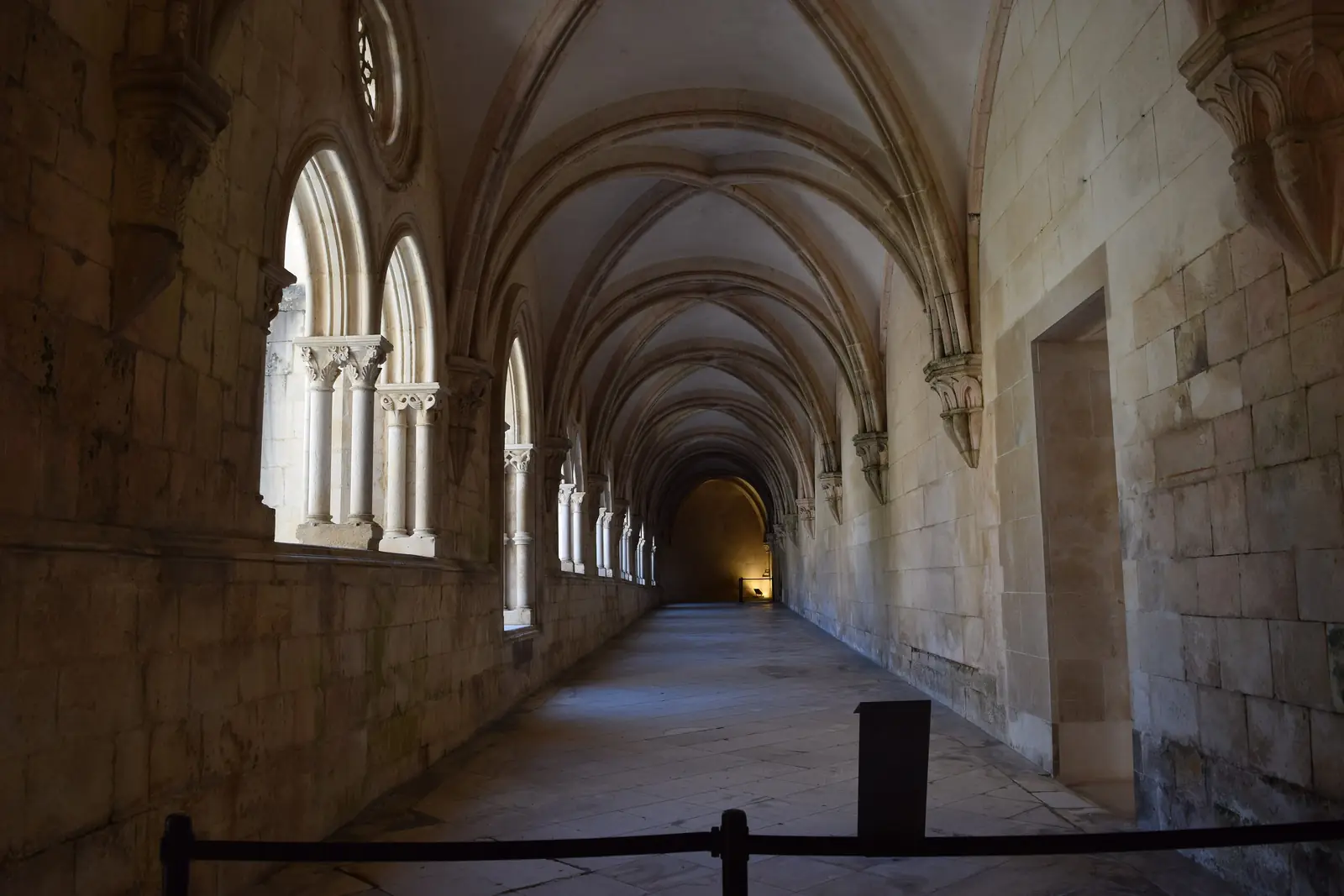
    End the day in the great Cistercian church, before the two tombs in the transept. Take your time with the carving: angels lifting Inês, the Last Judgement at her feet, the rose on Pedro’s tomb. Then, if you wish, the cloister and the monastic rooms.

    Why it matters

    Pedro had Inês’s body brought here from Coimbra in a solemn procession described by the chronicler Fernão Lopes, and was buried here himself in 1367. The tombs first stood side by side; they were arranged face to face much later.

    Good to know: The church, where the tombs stand, can usually be entered without a ticket; the monastic rooms are ticketed (not included). We time the day to reach Alcobaça well before closing.

  7. Return

    Return

    Back to your accommodation or another agreed drop-off point within the area we cover.

    Why it matters

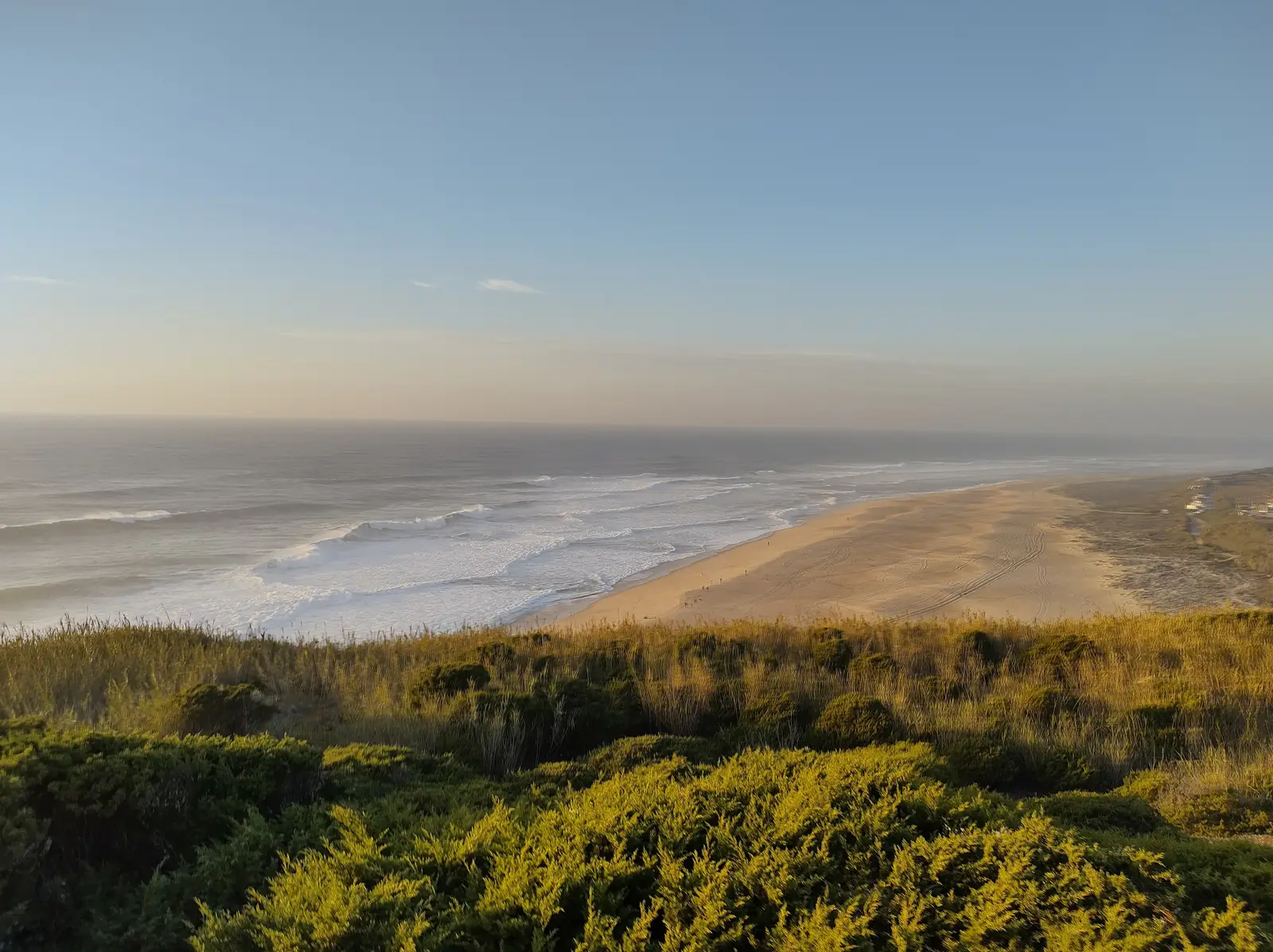
    Alcobaça is a short drive from the coast at Nazaré, so the day can end with the sun going down over the Atlantic, on request.

Route map of Royal Love & Tragedy1Coimbra2Santa Clara-a-Velha3Quinta das Lágrimas4Monastery of Alcobaça

The route

  1. 1 Coimbra
  2. 2 Santa Clara-a-Velha
  3. 3 Quinta das Lágrimas
  4. 4 Monastery of Alcobaça

Road routes calculated from OpenStreetMap data. Your driver may choose a different road on the day.

Places to be confirmed with your booking are listed in the itinerary but not drawn.

The story, in order

Pedro and Inês

A prince, a lady-in-waiting and a king who saw danger in their love. This is what the records tell us, and what centuries of storytellers added.

  • History
  • Tradition
  • Legend

How we tell this story: “history” marks events documented in the records, above all by the 15th-century chronicler Fernão Lopes. “Tradition” marks what has been handed down locally, and “legend” what later poets and storytellers added. All three are part of why the story still moves people.

  1. 1340

    History

    Inês arrives

    Constança Manuel comes to Portugal to marry Prince Pedro. Among her ladies is Inês de Castro, of a powerful Galician family.

  2. 1340s

    History

    A forbidden love

    Pedro’s love for Inês becomes a scandal at court, and King Afonso IV sends her away from Portugal.

  3. 1345

    History

    Constança dies

    Constança dies shortly after giving birth to Fernando, the future king. Pedro brings Inês back; they live together and have four children.

  4. Tradition

    Tradition

    Letters on the water

    Tradition says Pedro sent love letters to Inês along the water channel that ran from the Fonte dos Amores towards Santa Clara.

    Ivy-covered neo-Gothic arches at the Fonte dos Amores in the wooded gardens of Quinta das Lágrimas, Coimbra
  5. 7 January 1355

    History

    The murder

    Fearing the influence of Inês’s Castilian brothers and a threat to Fernando’s succession, Afonso IV consents to her death. She is killed in Coimbra; tradition places the scene at today’s Quinta das Lágrimas.

  6. 1355

    History

    A son against his father

    Pedro takes up arms against the king. Peace is made later that year, but he does not forget.

  7. 1357

    History

    Pedro is king

    Afonso IV dies, and Pedro I comes to the throne.

  8. 1360

    History

    The Cantanhede declaration

    At Cantanhede, Pedro declares that he had secretly married Inês years before. His word, backed by witnesses, remains the only evidence of the marriage.

  9. 1361

    History

    Revenge

    Two of the killers, handed over by Castile, are executed. According to the chronicler Fernão Lopes, Pedro had their hearts torn out. The third escaped.

  10. c. 1361–1363

    History

    The journey to Alcobaça

    Pedro has Inês carried from Coimbra to Alcobaça in a procession lined with torch-bearers, which Fernão Lopes calls the most honoured ever seen in Portugal.

    The carved Gothic limestone tomb of Inês de Castro in Alcobaça Monastery, her effigy attended by angels
  11. Legend

    Legend

    The dead queen crowned

    The famous scene of Inês’s corpse crowned on a throne, the court made to kiss her hand, is not in the chronicles. It first appears in literature some two centuries later.

  12. 1367

    History

    “Until the end of the world”

    Pedro dies and is buried at Alcobaça. A short carved inscription on his tomb is traditionally read as “until the end of the world”; scholars still debate its exact reading.

    The Gothic tomb of King Pedro I in Alcobaça Monastery, richly carved and resting on sculpted lions
  13. Tradition

    Tradition

    Face to face

    It is often said the tombs face each other so the lovers will see one another first on Judgement Day. They were originally placed side by side and only set face to face centuries later.

  14. 1572

    History

    Camões

    In canto III of Os Lusíadas, Luís de Camões gives Inês her most famous lines and turns the spring at Coimbra into a fountain of tears.

  15. Legend

    Legend

    The red stones

    The red tinge on the stones of the Fonte das Lágrimas comes from a natural algae. Legend says it is Inês’s blood.

Monastery of AlcobaçaTwo tombs, one story and a single, much-debated line in stone: until the end of the world.
The Gothic tomb of King Pedro I in Alcobaça Monastery, richly carved and resting on sculpted lions
The Gothic church and excavated cloister ruins of the Monastery of Santa Clara-a-Velha on the Mondego bank
Coimbra's old town rising on its hill above the Mondego river, crowned by the university tower

Practical information

Before you go

Duration
About 8 to 9 hours including pick-up and return; indicative, depending on where you start.
Pick-up
At your accommodation or an agreed meeting point within the area we cover, on the Silver Coast, around Leiria and Fátima, or in Coimbra; confirmed when you book.
Drop-off
At your accommodation or another agreed point; confirmed when you book.
Group size
Private: your group only, up to 6 guests (luggage permitting).
Walking
Moderate: two to three hours on foot across the day, including a steep climb through old Coimbra and uneven garden paths.
What to wear
Comfortable shoes for Coimbra’s steep cobbles and garden paths, and a light layer for cool church interiors.
Accessibility
Coimbra’s old town is steep, with cobbles and stairs; the gardens have gravel and uneven paths; Alcobaça is mostly level. If anyone has limited mobility, tell us in your request and we will suggest how to adapt the day.
Season
All year. The gardens and monuments close on some days; we check opening days for your date.

Included

  • Private vehicle and local driver for the whole day
  • Pick-up and drop-off within the agreed area
  • The story of Pedro and Inês, and local context, shared along the way
  • A route planned around your group, with time at each stop at your own pace

Not included

  • Entrance tickets (Quinta das Lágrimas gardens, Santa Clara-a-Velha, Alcobaça, University of Coimbra)
  • Meals and drinks
  • Guided tours inside monuments (official guides or audio guides can be suggested where available)
  • Gratuities

Arranged for each booking

  • Entrance tickets are bought on the day or in advance where needed; we tell you which stops have paid entry.

Price

One price for your whole group

The price covers the whole tour — a private vehicle and driver for your group alone, never seats on a shared excursion. It depends only on how many of you travel.

Your private experience

Guests
2 guests:

€350 total

€175 per person

Private tour · Just your group

Request your private tour Customize this journey

Open this route in the journey builder and make it yours.

Entrance tickets, meals and drinks are paid separately unless your proposal says otherwise.

Sending a request is free and is not a booking.

Questions

About this journey

How much of the story is true?

The core is documented: the love affair, the murder in 1355, Pedro’s revenge, his declaration of a secret marriage and the transfer of Inês to Alcobaça. The coronation of her corpse and the blood in the fountain are later legends. On the page and on the road, we tell you which is which.

Why start in Coimbra and end in Alcobaça?

To follow the story in the order it happened, ending at the tombs. From the Silver Coast it also makes sense on the road: Alcobaça is close to home at the end of the day. If you are staying in Coimbra, we can run it the other way.

Can we have lunch or stay at Quinta das Lágrimas?

The estate is also a hotel with a restaurant. We have no partnership with it, but you are welcome to book directly, and we will plan the day around your reservation.

Is the driver a guide?

Your driver tells the story and shares local context between stops but is not a certified tourist guide, so you visit at your own pace. Guided visits of the Quinta das Lágrimas gardens can be booked in advance with the foundation that runs them, and other official visits can be suggested where available.

Is Santa Clara-a-Velha worth adding?

If you enjoy history and archaeology, yes: it is where Inês was first buried and where Queen Isabel lay for over three centuries. It sits a few minutes from the gardens, so it fits easily when time allows.

Is this suitable for children?

Older children and teenagers often love it: a true story of kings, revenge and carved stone tombs. We tell it in a way that suits your family.

Can we include the University of Coimbra?

Yes, though a proper visit takes time and needs a ticket, so we would usually drop Santa Clara-a-Velha. For the University in depth, see our Coimbra experience.

Pair it with

  • Private8–9 hFull day

    Coimbra & Royal Portugal

    Learning, history, architecture and academic traditions

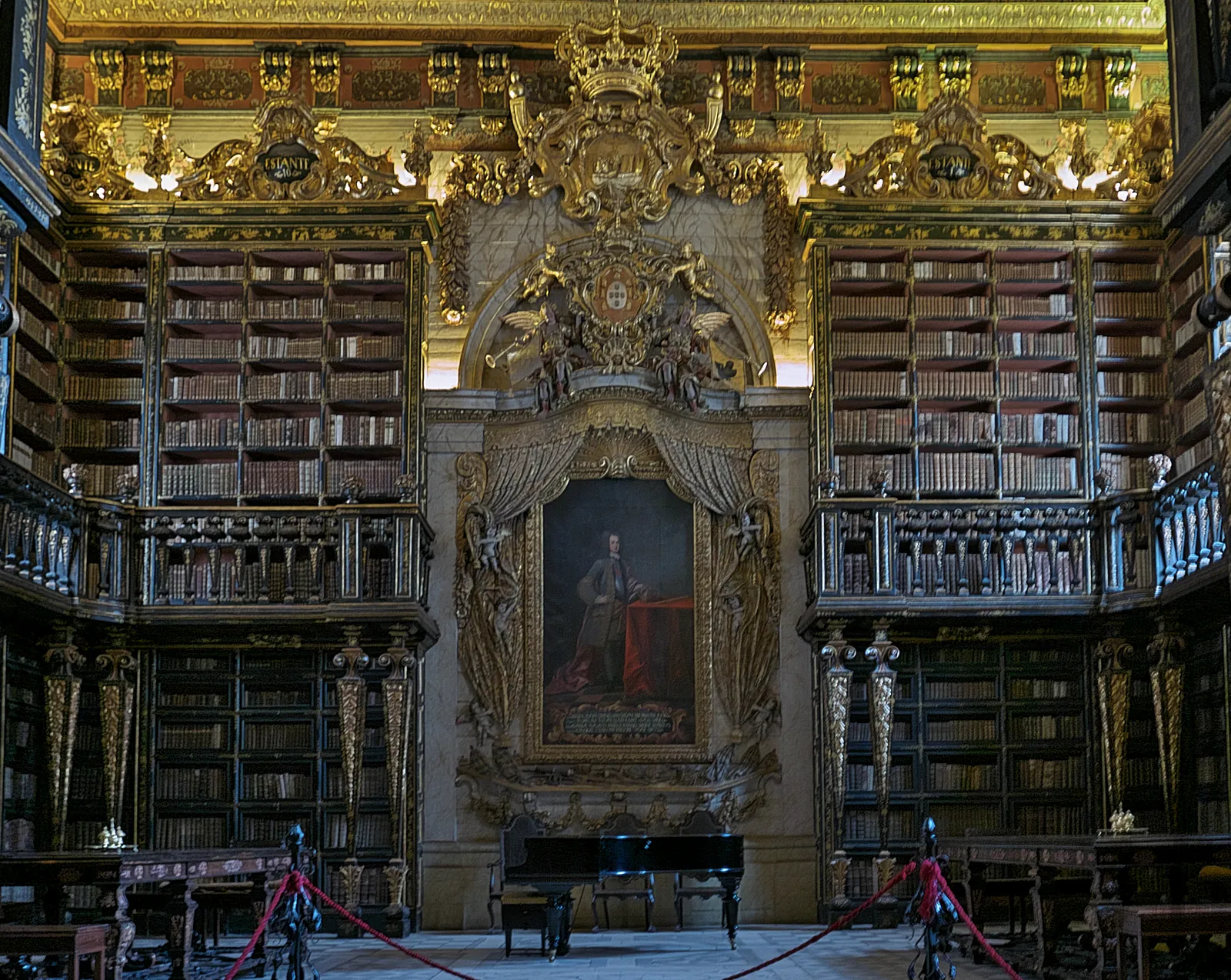
    Gives Coimbra a full day of its own: the University, its Baroque library and the old town Pedro and Inês knew.

    1. Coimbra

    From €350 / private group Up to 6 guests.

  • Private7–8 hFull day

    UNESCO Heritage Trail

    Architecture, World Heritage and the making of Portugal

    Returns to Alcobaça alongside Batalha and the Convent of Christ, the region’s three World Heritage monasteries.

    1. Alcobaça
    2. Batalha
    3. Tomar

    From €320 / private group Up to 6 guests.

  • Private4–5 hHalf day

    Romantic Silver Coast Escape

    Coastal sunsets, quiet moments and celebrations

    Carries the romance to the sea: a quiet bay, Nazaré in golden light and a clifftop sunset.

    1. São Martinho do Porto
    2. Nazaré

    From €250 / private group Up to 6 guests.

Love, murder and two tombs that face each other.

Plan this journey Customize this journey

Priced per vehicle, not per person — only your group travels.